Cute Illustrations for Valentines Day: A Comprehensive Evaluation of Design Assets
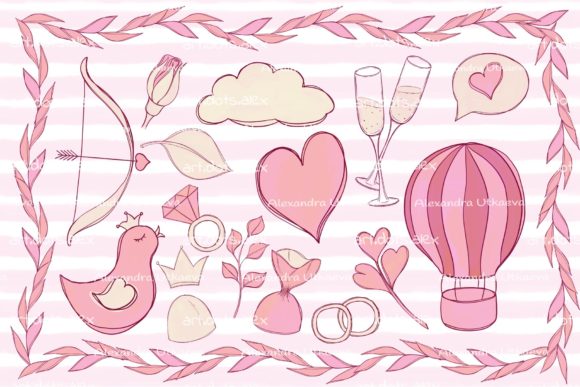
In the crowded landscape of digital design resources, finding high-quality assets that balance aesthetic appeal with technical utility is a persistent challenge. The Cute Illustrations for Valentines Day collection addresses this specific need by offering 16 distinct illustrations in PNG format on a transparent background at 300dpi resolution. While many market options exist for holiday-themed graphics, this particular set distinguishes itself through its focus on versatility and print readiness. For professionals and hobbyists alike, the decision to utilize these assets often hinges on how well they integrate into complex workflows involving fabric, packaging, or web design.
This evaluation explores the functional capabilities of these illustrations, comparing them against broader categories of stock imagery and hand-drawn assets. The goal is to determine where this collection fits within a designer's toolkit and to identify scenarios where it serves as an optimal solution versus when alternative approaches might be more effective.
Technical Specifications and Format Advantages
The foundation of any successful design project lies in the quality of the source material. The Cute Illustrations for Valentines Day pack provides files in PNG format with a transparent background. This specific configuration is critical for modern design workflows because it eliminates the need for manual background removal, a process that can often degrade image quality or result in jagged edges. Unlike JPEG files, which require solid backgrounds, PNGs allow designers to layer these elements seamlessly over various textures, colors, and patterns without visual artifacts.
Furthermore, the inclusion of a 300dpi resolution sets a clear benchmark for usability. In the context of digital-only projects, such as social media posts or blog headers, a lower resolution (72dpi) is often sufficient. However, the requirement for 300dpi indicates that these illustrations are intended for applications where physical reproduction is a primary consideration. This specification makes the collection particularly suitable for:
- Print Media: Posters, postcards, and magazine layouts where sharpness is non-negotiable.
- Textile Design: Creating seamless patterns for fabrics where pixelation would ruin the tactile experience.
- Packaging: Stickers and product labels that require high fidelity to maintain brand professionalism.
When comparing these specifications to vector-based alternatives, a tradeoff becomes apparent. Vector graphics offer infinite scalability but often lack the textured, hand-drawn charm that characterizes cute illustration styles. Conversely, raster images like these PNGs capture the nuance of brush strokes and soft shading that vectors sometimes struggle to replicate naturally. For users prioritizing a specific artistic style over absolute scalability, the 300dpi PNG format represents a strategic choice.
Comparing Styles and Artistic Approaches
Valentine's Day design assets generally fall into two broad categories: minimalist line art and detailed, colorful illustrations. The Cute Illustrations for Valentines Day collection leans heavily into the latter, offering decorative elements that are likely rich in color and form. This distinction is vital for designers evaluating their options based on the desired emotional tone of their project.
Minimalist styles are often preferred for modern, corporate branding or user interface design where clutter must be minimized. However, for products targeting a nostalgic, romantic, or playful audience, the detailed nature of these cute illustrations provides a stronger emotional connection. When considering alternatives, such as generic clip art or AI-generated imagery, the hand-crafted feel of this collection offers a unique value proposition. Hand-drawn assets typically convey warmth and authenticity, qualities that are increasingly valued by consumers who seek genuine human connection in their purchases.
However, this stylistic choice does come with limitations. Highly detailed illustrations may not scale down effectively for very small applications, such as favicons or tiny mobile icons, without losing detail. Designers must weigh the artistic richness against the practical constraints of the medium. If the end goal is a subtle accent rather than a focal point, simpler line art might be a more appropriate resource. But for creating standout compositions, the depth provided by this collection allows for more dynamic visual storytelling.
Versatility Across Mediums and Applications
The true test of a design asset is its adaptability. The description of this collection highlights a wide range of potential applications, from fabrics and wallpapers to logos and handmade items. This breadth suggests that the illustrations are designed with modular composition in mind. Users can combine decorative elements to create custom patterns or use individual figures as standalone accents.
In the realm of textile and wallpaper design, the ability to tile images is crucial. Transparent PNGs facilitate the creation of repeating patterns where the boundaries between images are invisible. This capability transforms simple illustrations into complex surface designs. Similarly, for packaging and stickers, the clean edges ensure that the product looks professional even when die-cut into irregular shapes. The 300dpi resolution ensures that these details remain crisp whether printed on glossy cardstock or matte vinyl.
For digital creators, the utility extends to web pages, blogs, and magazines. Here, the transparent background allows for creative overlays on colored sections or photographic backgrounds. A designer can place a cute illustration over a gradient header or a textured paper background to add visual interest without disrupting the layout hierarchy. The collection supports the creation of cohesive visual identities across different platforms, ensuring that a brand's Valentine's Day campaign maintains consistency from email newsletters to physical greeting cards.
Evaluating Tradeoffs and Decision Factors
While the Cute Illustrations for Valentines Day pack offers significant benefits, informed decision-making requires acknowledging potential drawbacks and limitations. One primary consideration is the fixed nature of raster images. Once the resolution limit is reached, scaling up will result in pixelation. This contrasts with vector formats, which can be resized indefinitely. For projects requiring extreme flexibility in size, such as large-scale billboards, designers might need to seek vector equivalents or accept the limitation of the current file type.
Another factor is the specificity of the theme. These illustrations are explicitly themed around Valentine's Day. While this makes them perfect for seasonal campaigns, it limits their year-round utility compared to generic heart shapes or abstract romantic motifs. A business looking for evergreen content might find this collection too niche, whereas a seasonal marketer would view this specificity as a strength. The decision to purchase should align with the timeline of the project; if the goal is immediate, high-impact seasonal content, the thematic focus is advantageous.
Licensing terms also play a pivotal role in the selection process. The prompt emphasizes the importance of reading license terms before commercial use. This is a standard but critical step. Some assets are restricted to personal use only, while others allow for commercial modification. Understanding these legal boundaries prevents future disputes and ensures compliance. Designers should verify whether the pack allows for resale of modified designs, such as incorporating the illustrations into a t-shirt for sale, or if usage is limited to internal marketing materials.
Best-Fit Scenarios and Recommendations
Determining when to choose this collection involves assessing the specific needs of the project against the strengths of the assets. The Cute Illustrations for Valentines Day set is an excellent choice for:
- Small Business Owners: Those creating handmade goods, greeting cards, or boutique packaging who need high-quality, ready-to-use graphics without the cost of commissioning original art.
- Fabric and Textile Designers: Professionals seeking to create seamless patterns for clothing or home decor where transparency and print resolution are paramount.
- Digital Content Creators: Bloggers and social media managers looking to enhance posts with engaging, high-resolution visuals that stand out in a feed.
- Event Planners: Individuals designing invitations, posters, and signage for Valentine's events who require a polished, cohesive look.
Conversely, this collection may not be the ideal fit for:
- Large-Scale Outdoor Advertising: Where vector scalability is required to ensure clarity at massive sizes.
- Year-Round Branding: Projects that require a neutral aesthetic not tied to a specific holiday.
- Complex UI/UX Systems: Where lightweight, scalable icons are needed for consistent performance across devices.
In conclusion, the Cute Illustrations for Valentines Day collection represents a specialized tool within the broader ecosystem of design resources. Its combination of high-resolution PNG files, transparent backgrounds, and thematic charm makes it a powerful asset for creating beautiful compositions and designs. By understanding its technical specifications and comparing them to alternative formats, designers can make informed decisions that maximize the impact of their work. Whether used for fabrics, packaging, or digital media, these illustrations provide a solid foundation for creative expression, provided that licensing and usage requirements are carefully observed.
As with any design investment, the ultimate value lies in the final output. Users are encouraged to experiment with combining these decorative elements to discover unique applications. Feedback from the community regarding experiences with such products helps refine the understanding of what works best in real-world scenarios. Together, through shared knowledge and careful evaluation, designers can continue to produce higher quality work that resonates with audiences.